Create a Menu for Hair Salon Success in 2026

A well-crafted menu for a hair salon does so much more than list prices. It’s one of your most powerful marketing tools, speaking to your clients, shaping their choices, and showing them what your brand is about. Juggling multiple tools to manage this—one for booking, another for reminders, and another for staff—can be a huge headache for owners of salons, barbershops, and spas.
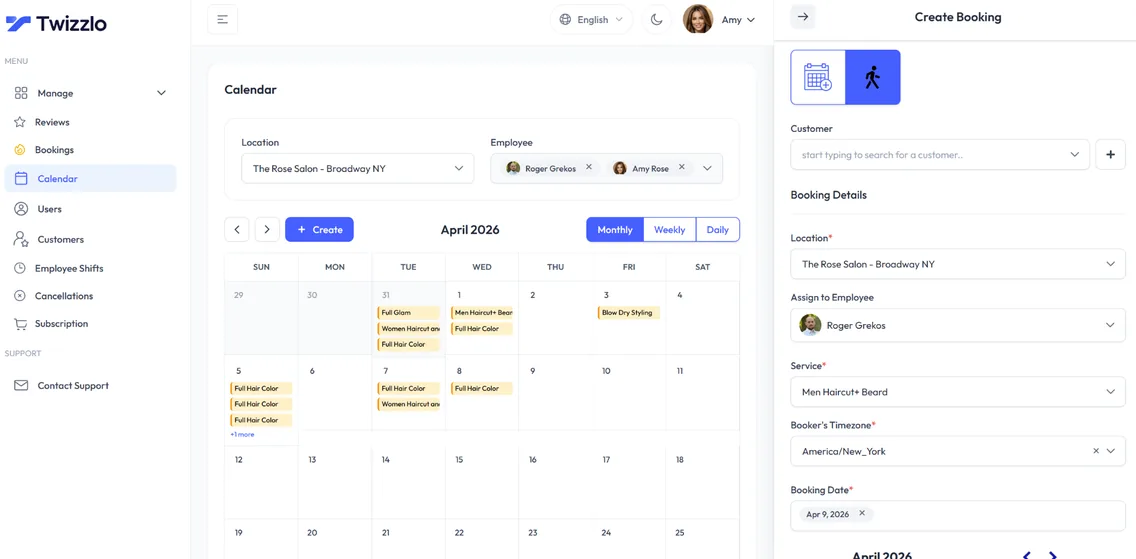
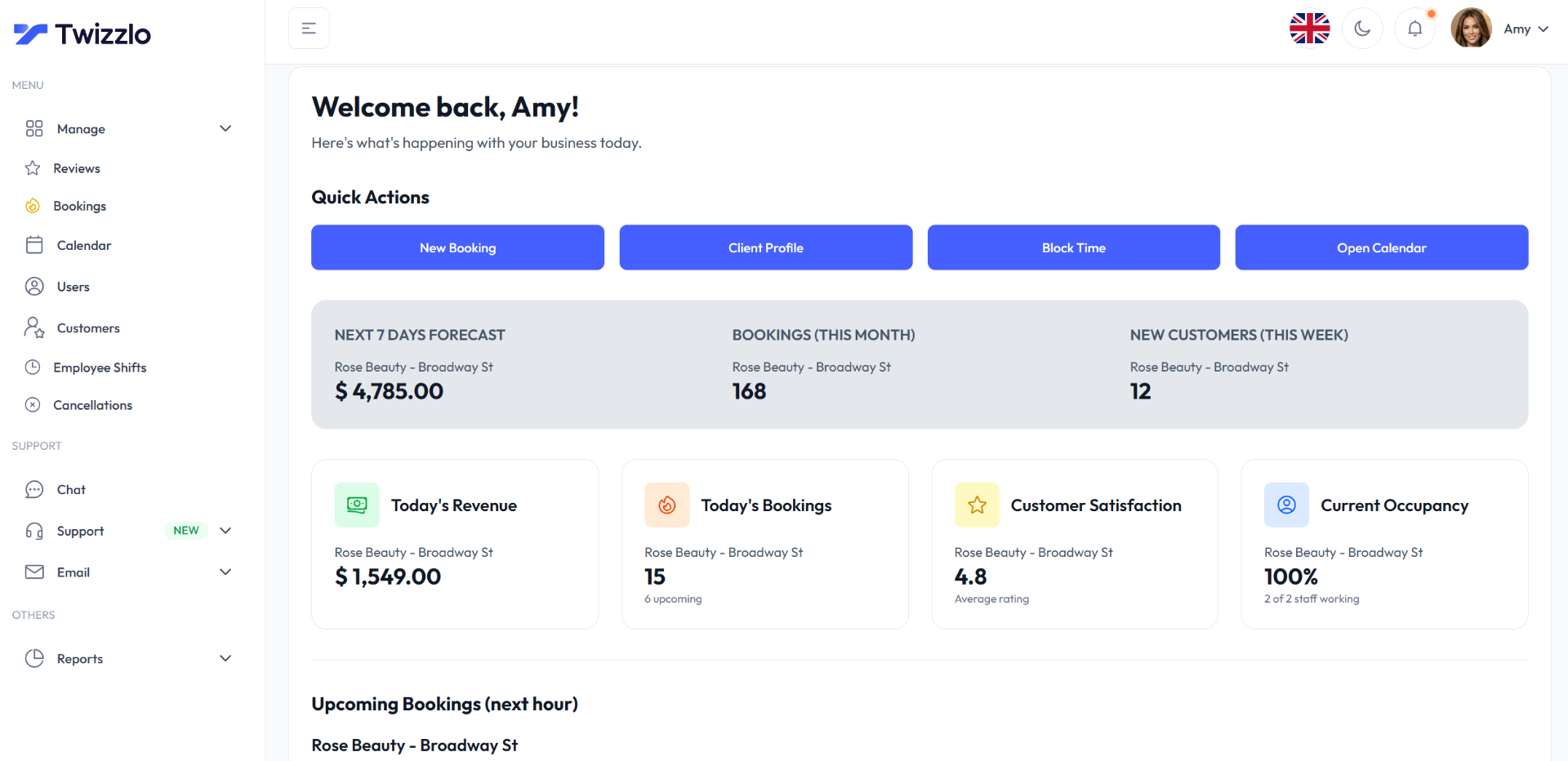
Tools like Twizzlo are built specifically for this—combining booking, staff scheduling, client history, and performance insights in one platform, without the tiered pricing that most tools use to penalize growth. A great menu integrated with the right software is the first step to a smoother, more profitable business.
Your Salon Menu Is More Than a Price List

Think of your service menu as your silent salesperson. It works around the clock to attract the right kind of client, eliminate any awkwardness around pricing, and give your stylists the confidence to suggest add-ons and upgrades. A clear, thoughtful menu makes the entire client journey—from discovery to booking—feel effortless.
The US hair salon industry is thriving, showing an incredible 16.9% growth in 2022 and on track to reach a market size of $60.6 billion by 2026. Salons earn this revenue through a smart mix of services, with haircuts and styling making up 38.5% of sales and color services right behind at 17.1%. It’s clear that a strong menu is the backbone of a profitable salon.
Bridging Your Menu and Operations
Here’s where many service business owners get stuck: the gap between a beautiful menu and the reality of day-to-day operations. Most scheduling tools charge more as you add staff or locations, creating a barrier to growth. That disconnect creates friction for your staff and, even worse, for your clients.
The goal is to turn your menu from a static PDF into an interactive tool that actually drives revenue. You want to make the path from browsing your services to securing an appointment completely seamless.
This is exactly why an all-in-one platform is no longer a luxury—it’s a necessity. Using appointment scheduling software that ties directly into your client management and service menu allows you to offer 24/7 online booking without any extra work. You can find more tips and tricks in our other articles for hair salon owners.
When you connect your carefully designed menu to an intelligent booking system, you get rid of the administrative bottlenecks. Clients can book the exact service they’re looking for, whenever it’s convenient for them. That simple connection turns your menu into an active, appointment-booking machine that works for you day and night.
Laying the Groundwork for a Killer Service Menu

Before you get lost in the fun stuff like fonts and colors, we need to talk about the bones of your service menu. A poorly organized menu doesn’t just confuse clients; it can actively cost you bookings. Your real goal is to create a clear, logical path that helps clients find what they’re looking for and maybe even discover a new service they didn’t know they needed.
Think like a client, not a stylist. You might be an expert in ten different foiling techniques, but your client is probably just searching for “highlights.” Grouping your services under broad, easy-to-digest headers is the first, most crucial piece of the puzzle.
How to Create Clear and Logical Service Categories
Let’s start by mapping out the main pillars of your salon. The most successful menus all share one thing: a simple, intuitive structure that anyone can understand at a glance. This principle of clarity isn’t just for hair salons—it’s just as vital for a pet groomer organizing bath and trim packages or a wellness clinic separating massage from acupuncture.
For most salons, the categories fall into place quite naturally:
- Cutting & Styling: This is your home base for everything from a quick trim to a full-on restyle and blowout.
- Color Services: You might want to break this down even further. Think ‘All-Over Color’ for single-process jobs and ‘Dimensional Color’ for things like balayage, foils, and lowlights.
- Treatments: This is the perfect spot for all those value-add services like deep conditioning masks, scalp therapies, and shine-boosting glosses. For a deeper look, this comprehensive guide on hair treatments is a fantastic resource.
- Extensions: It’s best to keep these in their own section, since they almost always require a consultation and have a completely different pricing structure.
- Special Occasion Hair: Group your updos, bridal styling, and any other formal hairstyling here.
A new client searching for a sun-kissed look probably won’t type “balayage” into your booking site, but they will absolutely understand a category called “Dimensional Color.” Always choose client-friendly terms over industry jargon. It makes your menu feel welcoming, not intimidating.
Audit Your Current Services
With your categories mapped out, it’s time for a little spring cleaning. A service audit is your chance to take a hard look at everything you offer and decide what stays, what goes, and what’s missing. Don’t be afraid to be honest with yourself here.
Pull up your booking history and sales data from the last year. What services are your bread and butter? And which ones are just collecting dust? If a service is sitting on your menu but has only been booked twice, it’s just clutter. You either need to cut it or figure out a real strategy to promote it.
On the flip side, what are clients always asking for? Are there new trends or techniques your stylists are excited to learn? This audit isn’t just about cutting the dead weight; it’s your best tool for finding golden opportunities. You might discover a huge demand for a service you don’t even offer yet. For more ideas on what to include, check out our complete salon services list.
Think of this as more than just an organizational task. Getting your categories and offerings right is a strategic move that makes your menu for hair salon success a powerful business tool. When this foundation is solid, everything that follows—from pricing to design—becomes infinitely easier and more effective.
The Art and Science of Salon Service Pricing
Figuring out what to charge for your services is easily one of the most nail-biting decisions you’ll make as a salon owner. It feels like a tightrope walk—price too high, and you might scare away new clients; price too low, and you’re not just leaving money on the table, you’re undervaluing your own craft and hurting your salon’s long-term health.
The good news? You don’t have to throw a dart at a board and hope for the best. Smart pricing is part math, part market savvy. It’s about truly understanding your costs, recognizing your value, and then confidently communicating that through a well-crafted service menu.
Choosing the Right Pricing Model
There are a few solid ways to approach pricing, and the most successful salons use a mix of strategies. They’ll apply one model for a standard cut and a completely different one for a complex color correction. Here’s a look at three common approaches that you can adapt for your own business.
Pricing Models for Salon Services
Deciding on a pricing model isn’t a one-and-done deal. It’s about finding the right blend that covers your costs, honors your team’s expertise, and makes sense to your clients. This table breaks down the most common strategies we see in the industry.
| Pricing Model | How It Works | Best For | Potential Pitfall |
|---|---|---|---|
| Cost-Plus Pricing | You figure out the total cost of a service (products, time, overhead) and add a set markup percentage for your profit. | Foundational services where costs are fairly predictable, like a standard haircut or a single-process color. | It can seriously undervalue a stylist’s unique skill or the amazing transformation they deliver for the client. |
| Value-Based Pricing | You set prices based on what the result is worth to the client, not just what it costs you to produce. Think of a life-changing color correction. | Specialized, high-skill services like balayage, creative color, extensions, or major corrective work. | This requires a strong brand and stylists who are confident enough to communicate and own their high-value work. |
| Competitive Pricing | You research what similar salons in your area are charging and position your prices somewhere in that ballpark. | A great starting point for new salons or when you’re testing the waters in a new market to make sure you’re competitive. | You risk getting into a “race to the bottom” if you only compete on price, completely ignoring what makes your salon special. |
Ultimately, your pricing strategy needs to be flexible enough to work for your salon’s specific situation. A hybrid model often provides the best of all worlds.
Your location is a huge piece of this puzzle. The local market really sets the tone for what clients expect to pay. For example, a women’s haircut averages around $93 in California but just $17 in Wyoming. When you learn that a woman might spend up to $225,360 on her hair over a lifetime, as this IBISWorld hair salons report points out, you realize how critical pricing is. Sometimes, your retail products will even end up being more profitable than the services themselves.
Calculating Your True Cost Per Service
If you want to price for profit, you have to know your numbers cold. The “cost-per-service” isn’t just the price of the color tube and shampoo you used. It’s a small slice of every single expense that keeps your salon doors open.
First, get a clear picture of your total monthly overhead. This includes everything:
- Rent or mortgage
- Utilities (water, electricity, Wi-Fi)
- Software subscriptions (like your appointment scheduling software)
- Insurance and licenses
- Marketing and advertising budgets
- Cleaning supplies, backbar, and all the little things
Once you have that total, you can calculate the “cost-per-minute” of running your salon. Just divide your total monthly overhead by the number of minutes your salon is open that month. Now, for any given service, you add the product cost and the stylist’s commission to that operational cost. Whatever is left over is your actual profit.
Key Takeaway: A classic mistake is juggling too many different tools—one for booking, another for payments, and a separate spreadsheet for payroll. This doesn’t just make it a headache to calculate your costs; it’s a huge time-waster. An all-in-one scheduling platform with integrated reporting gives you a single, clear dashboard for all your expenses and revenue streams.
Implement Tiered Pricing and “Starting At” Rates
Not every stylist on your team has the same experience, and your menu should reflect that. Tiered pricing, based on a stylist’s level or seniority, is a transparent and fair system. It creates a clear career path for your team and gives clients choices that fit their budget.
A simple structure might look like this:
- New Talent/Junior Stylist: A lower price point, perfect for attracting clients on a tighter budget.
- Senior Stylist: Your mid-range pricing for skilled, established stylists with a solid clientele.
- Master Stylist/Artistic Director: The premium price for your most in-demand experts with specialized skills.
For services where the time and product can vary wildly—like color corrections or vivids—flat rates are a recipe for losing money. Instead, use “starting at” pricing on your menu. This tiny phrase is a game-changer. It manages client expectations from the get-go and protects your bottom line. It clearly signals that the final price will depend on the hair’s length, density, and history, making a thorough consultation a natural and necessary next step.
When you can easily track these bigger, more complex jobs using detailed sales reports software, you’ll quickly see which services are your true money-makers.
Writing Service Descriptions That Sell
Your service menu is more than just a price list—it’s one of your most powerful sales tools. When a client picks it up, they should feel like they’re in expert hands. The right words can turn a simple service into an irresistible experience, boosting both your bookings and your average ticket.
Think about it. The difference between a service that gets booked constantly and one that collects dust is often just a single sentence. You have to stop listing tasks and start selling outcomes. It’s all about painting a picture of the result and connecting with the why behind a client’s visit, not just the what.
Moving from Tasks to Benefits
When a client is in your chair, you naturally speak in terms of benefits. You wouldn’t just say, “I’m applying conditioner.” You’d say something like, “I’m using this amazing repairing mask to bring the moisture and shine back to your hair. It’s going to feel incredibly soft and look so much healthier.”
That’s the exact energy your menu descriptions need.
Let’s look at a quick before-and-after:
-
Instead of: “Deep Conditioning Treatment”
-
Try: “Revitalizing Hair Repair Masque: An intensive, customized treatment to restore moisture, shine, and strength to tired, stressed hair.”
-
Instead of: “Gloss”
-
Try: “Luminous Shine Gloss: A quick, customized color gloss to refresh your tone, neutralize brassiness, and deliver brilliant, reflective shine between color appointments.”
See the difference? This approach instantly answers the client’s unspoken question: “What’s in it for me?” It shifts their focus from the price to the incredible value they’re about to receive.
The most effective descriptions tap into emotion and the senses. Words like revitalize, restore, luminous, silky, voluminous, and effortless help a client mentally rehearse how great they’re going to feel. They aren’t just buying a haircut; they’re buying confidence.
A Simple Framework for Great Descriptions
You don’t have to be a professional copywriter to pull this off. A simple framework works for almost any service on your menu for hair salon offerings.
[Benefit-Oriented Service Name] + [Who it’s for or what problem it solves] + [The experience or key result]
Here’s that framework applied to a balayage service:
- Benefit-Oriented Name: Sun-Kissed Balayage
- Who It’s For: Perfect for anyone wanting natural, low-maintenance color with a seamless grow-out.
- The Experience/Result: Our stylists hand-paint highlights to create a beautiful, dimensional look that mimics natural sunlight, leaving you with soft, blended, beach-inspired hair.
This not only makes your services sound more appealing, but it also educates your clients, empowering them to choose the right service for their hair goals. If you’re building a salon from the ground up, our guide on how to start a hair salon is a must-read for getting these foundational pieces right.
The Profit Power of Add-Ons
Once your core services are dialed in, it’s time to focus on add-ons. These are the small, high-margin offerings you can easily attach to a main appointment. They’re a secret weapon for bumping up your average ticket with very little extra time on the clock.
Think about quick services that offer a big, noticeable impact.
- Express Scalp Detox: A 10-minute clarifying scalp treatment to remove buildup and invigorate the follicles, perfect to add on during the shampoo.
- Crystal Clear Gloss: An extra 15 minutes at the bowl for a clear gloss that adds incredible shine to any hair color without changing the tone.
- Fringe Trim / Bang Refresh: A quick touch-up for regulars between their full haircut appointments.
- Intensive Bond-Builder Shot: A concentrated dose of a bonding treatment added right into a color formula or used as a quick standalone treatment.
The trick is to make these add-ons feel like a no-brainer. Position them strategically on your menu, right below the “parent” service they complement. When a client is booking a “Full Highlight,” seeing an option for a “Toning Gloss” or “Bond-Builder Shot” right there makes the upsell feel natural and helpful.
This is where Twizzlo stands out. Unlike most platforms that lock key features behind expensive tiers or force upgrades, Twizzlo offers one plan with unlimited appointments, staff, locations, and clients. You get peace of mind with stable pricing, so growing your business doesn’t mean growing your software bill. From a solo practice to a multi-location enterprise, Twizzlo is built for you.
Designing Your Menu for Print and Web
Your service menu is more than just a list of prices; it’s a direct reflection of your salon’s brand and professionalism. A beautifully designed menu feels inviting and high-end, while a cluttered or cheap-looking one can unconsciously devalue your incredible work before a client even sits in your chair. You’ll need two versions that feel related but are built for different environments: a physical menu for inside the salon and a digital one for your website.
Think of your printed menu as part of your salon’s decor. It should be clean and easy to scan, with plenty of breathing room to guide the eye. Your font choice says a lot—is your brand modern and sharp, or classic and elegant? Just make sure it’s always readable. Even the paper you choose matters. A heavier, textured cardstock can communicate luxury in a way that flimsy paper just can’t.
Taking Your Menu Online
When you move your menu to your website, the game changes. Most of your clients will be looking at it on their phones, so a mobile-first approach is non-negotiable. That means clear, large fonts, colors with enough contrast to be easily read, and a simple vertical layout that doesn’t force anyone to pinch and zoom.
Here’s a huge mistake I see salons make all the time: they just upload a PDF or an image of their print menu. It’s a quick fix, but it’s a disaster for getting found online. Search engines like Google can’t read the text inside an image, making all your carefully named services invisible to potential new clients.
For your salon to show up when someone searches “balayage near me,” your online menu must be built with real HTML text. This is how search engines discover, index, and rank your services, driving local traffic right to your door.
This kind of smart thinking has always driven our industry forward. Back in 1888, Martha Matilda Harper didn’t just open a salon; she created the first salon franchise and even invented the reclining shampoo chair we all use today. She understood scaling. For today’s owners, tools like Twizzlo’s all-in-one scheduling platform carry on that legacy, making it simple to manage everything from a single boutique to multiple locations. You can read more about the innovative history of hair salons.
Creating a Cohesive Experience
Your printed menu and your website should feel like they’re part of the same family. Using the same branding, tone of voice, and—most importantly—the same pricing across both builds trust. If you’re an esthetician or massage therapist who has curated a tranquil, spa-like atmosphere in your studio, that calming, clean aesthetic needs to be mirrored on your online booking page.
You can also use technology to link your physical and digital worlds. Have you considered digital menu boards? They turn a static list into a dynamic marketing tool right in your salon. You can use them to spotlight a stylist of the week, flash a last-minute opening, or run a slideshow of your best before-and-after work.
In the end, whether it’s printed on beautiful paper or coded onto a webpage, your menu has one job: to get an excited client to book an appointment with you. It’s the first handshake, so make it a good one.
Turning Your Menu into an Automated Booking Tool
You’ve designed a beautiful menu. Now what? If it’s just a static price list, you’re leaving a ton of money and time on the table. The final, and arguably most important, step is to connect that menu directly to your appointment scheduling software.
This is where all your hard work on clear descriptions and smart pricing starts to pay off, creating a booking machine that works for you 24/7. Think about it: no more phone tag confirming what a service includes, no more manually blocking out an hour for color to process. The system handles all of that, freeing up your front desk to focus on the clients standing right in front of them.
Building Your Digital Service List
The first step is to get your physical menu loaded into your online booking platform. This isn’t just copying and pasting; you’re programming the logic of your salon’s entire day. For every single service you offer, you’ll define the details that make automation possible.
- Service Durations: How long does a cut actually take? Set precise appointment lengths.
- Processing Time: Automatically add buffers for color development or treatments. This keeps your schedule accurate without you having to block it manually.
- Stylist Assignment: Link services to the stylists qualified to perform them. A client can’t book a complex color correction with a junior stylist by mistake.
- Pricing & Deposits: Set your standard prices, any “starts at” rates for variable services, and configure deposits to cut down on no-shows.
Your menu strategy has to work across different formats—in-hand, on a desktop, and most importantly, on a phone. It’s all part of one connected workflow.

When clients can see your detailed menu for a hair salon and book the exact service with the right stylist at 3 AM, you’ve removed all the friction from the process. This level of detail is also non-negotiable for businesses like spas and tattoo studios, where appointments are often complex and multi-staged.
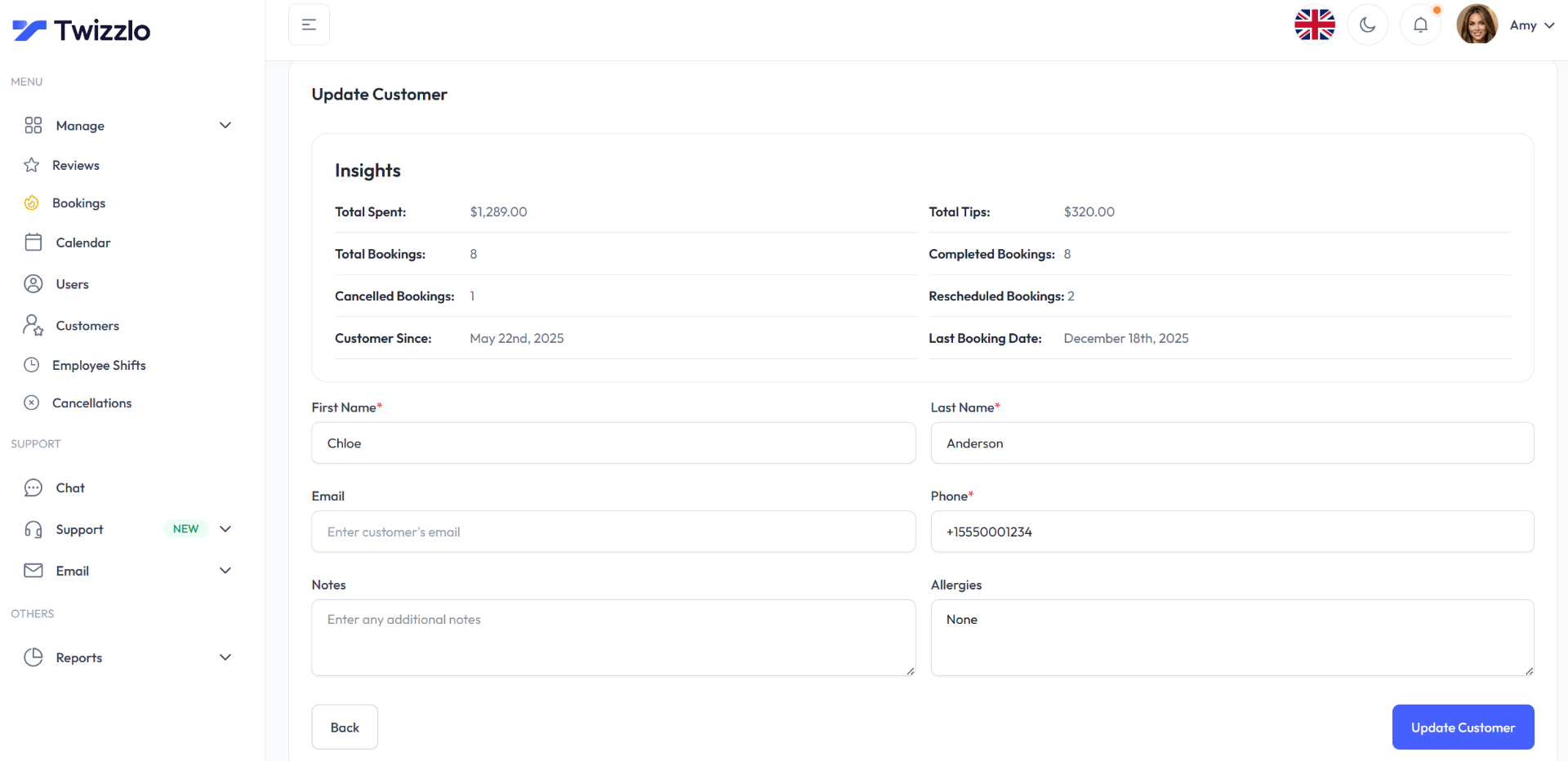
Here’s a pro tip: Integrating your menu with your client management software (CRM) is the next level. When your booking system knows a client’s service history and has their color formulas on file, your team can make personalized upsell suggestions that feel genuinely helpful, not salesy.
Getting this full integration right is the ultimate goal. If you’re ready to find the right platform to make this happen, check out our guide on choosing the best salon booking system to match your salon’s needs.
Common Questions (and Expert Answers) About Salon Menus
Let’s tackle a few of the questions I hear all the time from salon owners when they’re wrestling with their service menu. These are the details that can make a huge difference in your daily operations and your bottom line.
How often should I update my salon menu and prices?
Think of your menu as a living document. I always recommend a full-scale review at least once a year. This isn’t just about raising prices; it’s a chance to take a hard look at your costs, see what your local competitors are up to, and make sure your pricing reflects your expertise.
Of course, you can also inject some excitement by adding new, trending services seasonally. A fresh summer balayage package or a winter deep-conditioning treatment keeps things interesting for your regulars.
And when you do adjust your prices? Communication is everything. Give your clients a heads-up of at least 30-60 days. It’s a simple act of respect that preserves the trust you’ve worked so hard to build. No one likes a surprise at the checkout counter.
What is the biggest mistake salons make with their menu?
Hands down, the most costly mistake is being vague. A menu that just lists “Color” with one price is a recipe for disaster. What does that even mean? Is it a root touch-up? Does it include a gloss? What about the blow-dry? This ambiguity almost always leads to an awkward, uncomfortable conversation when it’s time to pay.
You have to get comfortable with “Starts At” pricing. For any service where hair length, density, or product usage varies, this is non-negotiable. Combine this with clear, benefit-driven descriptions, and you’ll manage client expectations from the get-go while protecting your profit.
Should I list all my services on my online booking page?
Absolutely, yes. Put every single service you want clients to book themselves online. Your online menu is a silent salesperson. When a client can browse all your offerings at their leisure, they often discover (and book!) services they didn’t even know you offered. It’s one of the easiest ways to bump up your average ticket.
Don’t worry about it feeling cluttered. Modern booking software for service businesses is designed to handle extensive menus beautifully. A good system will let you organize services into neat categories, making it incredibly easy for clients to navigate on their phones without feeling overwhelmed.
How Twizzlo Can Help
If you’re running an appointment-based business and tired of stitching together multiple tools—or getting hit with surprise fees every time you grow—Twizzlo is worth a look. It brings bookings, staff scheduling, client history, and performance insights into one platform, with one transparent plan and no feature lockouts.
👉 Try Twizzlo — built for appointment-based businesses that want to scale without the pricing games.
2 thoughts on “Create a Menu for Hair Salon Success in 2026”
Comments are closed.