
Coaching Contract Template: Free Coaching Agreement to Copy

In short
A coaching contract template is a ready-made agreement that a coach and client complete and sign before paid coaching starts. It sets the scope, session schedule, fees, cancellation rules, confidentiality, the limits of coaching and how either side ends it. Copy the 20-clause coaching agreement on this page, fill in the brackets and have it reviewed locally.
- Sign the agreement before the first paid session, and cover scope, fees, schedule, cancellations, confidentiality, the limits of coaching and termination.
- Write numbers instead of intentions, then set your booking link, reminders and cancellation window to the same rules, so one policy governs every session.
- Keep one master agreement and swap clauses for group programs, company-sponsored coaching and high-access offers.
In this article9 sections

You finish a great discovery call. The client is excited, you’re aligned on the goal, and the chemistry is right. Then the practical question lands. What exactly are they buying, when do they pay, what happens if they cancel, and where does coaching stop?
Leave those answers vague and the problems start. One client assumes text access is unlimited. Another misses an invoice and is surprised when you pause support.
A coaching contract template solves that before it turns into friction. The contract records what you and the client agreed; the sessions run through your booking tool, and its booking and reminder features should follow the same rules.
Coaching contract template: the full coaching agreement to copy
Copy the coaching contract template below, replace every bracketed field with your own terms and keep the clause numbers, so you and your client can refer to them. This contract for coaching services has 20 numbered clauses, from the parties to both signatures, and works for online or in-person coaching. There is nothing to download or sign up for.
Use it as a coaching agreement template; Table 1 after it shows what to write in the main blanks.
Coaching Agreement
1. Parties
This Coaching Agreement (“Agreement”) is between [Coach or coaching business legal name, business address and email] (“Coach”) and [Client full name, address and email] (“Client”). If a company pays for the coaching, it is named here: [Sponsor company name, contact person and email, or “None”] (“Sponsor”).
2. Effective Date and Term
This Agreement starts on [start date] and ends [on an end date or after the last session in Clause 3], unless ended earlier under Clause 17.
3. Coaching Services
Goal area: [for example, leadership communication, career transition or business growth].
Format: [video, phone or in person].
Sessions: [number] sessions of [length] minutes.
Frequency: [weekly, every two weeks or monthly].
Also included: [for example, a short summary after each session].
4. What Coaching Is Not
Coaching is not therapy, counseling or mental health care, and it is not medical, legal, financial or other professional advice. The Client makes their own decisions and is responsible for the results of those decisions. If the Client’s needs fall outside coaching, the Coach may recommend that the Client see a qualified professional.
5. Client Responsibilities
The Client agrees to attend scheduled sessions on time, prepare for them, complete the actions agreed in sessions, share honest information and follow the scheduling rules in Clauses 8 and 9.
6. Coach Responsibilities
The Coach agrees to deliver the sessions described in Clause 3, start and end them on time, follow the communication terms in Clause 11 and keep information confidential as described in Clause 12.
7. Fees and Payment
Fee: [amount and currency, per session, per package or per month].
Due date: [for example, in full before the first session is booked, or on the first day of each month].
Payment method: [accepted methods].
Late or failed payment: [what happens, for example, sessions pause until the balance is paid].
Payer: [the Client, or the Sponsor named in Clause 1].
8. Booking and Scheduling
Sessions are booked only through [the Coach’s booking link or other official method].
All session times are in [time zone].
Sessions take place on [video platform or phone number, or the in-person address].
9. Cancellations, Rescheduling and No-Shows
To cancel or reschedule, the Client gives at least [notice period] notice through [the booking link or stated channel].
A later cancellation counts as [a used session, or a fee of amount].
If the Client misses a session without canceling, it counts as [a used session, or a fee of amount].
If the Coach cancels, the session is rescheduled at no charge.
Emergencies: [how exceptions are handled].
10. Unused Sessions and Expiry
Sessions not used by [date, or number of weeks after the start date] expire and [are not refunded, or are credited as follows].
11. Communication Between Sessions
Between sessions, the Client may contact the Coach by [channel] about [topics, for example scheduling].
The Coach replies within [reply window] during [business hours and time zone].
The Coach does not provide emergency or crisis support. In an emergency, the Client contacts local emergency services.
12. Confidentiality
The Coach keeps confidential what the Client shares in coaching, except where disclosure is required by law or a court order, is needed to prevent serious harm to the Client or others, or is agreed by the Client in writing.
If there is a Sponsor, the Sponsor receives only: [for example, attendance dates, or “nothing”].
13. Client Records
The Coach keeps [what, for example session notes] in [where] for [how long], then deletes them. The Coach’s privacy notice at [link] explains how personal information is handled.
14. Session Recordings
Sessions [are not recorded, or are recorded only when both parties agree in writing]. Any recording is kept by [the Coach, the Client or both] for [period] and shared only if both parties agree in writing.
15. Materials and Intellectual Property
Worksheets, tools and other materials the Coach provides remain the Coach’s property. The Client may use them for their own development but may not copy, sell or share them without the Coach’s written permission.
16. Refunds
Refund terms: [when fees are refunded, if ever].
17. Termination
Either party may end this Agreement with [notice period] written notice. The Coach may end it immediately if [for example, fees stay unpaid]. Fees for sessions already held remain due, and unused paid sessions are [refunded, credited or not refunded].
18. Limitation of Liability
To the extent the law allows, the Coach’s total liability under this Agreement is limited to [for example, the fees the Client paid under this Agreement].
19. Governing Law and Disputes
This Agreement is governed by the laws of [state or country]. The parties will first try to settle any dispute by [for example, mediation].
20. Entire Agreement, Changes and Signatures
This Agreement is the whole agreement between the parties about the coaching and replaces earlier discussions. Changes are valid only in writing signed by both parties. The parties may sign electronically if both agree.
Coach
Name: [Name]
Signature: ____________________
Date: ____________________
Client
Name: [Name]
Signature: ____________________
Date: ____________________
Sponsor (if any)
Name and title: [Name, title]
Signature: ____________________
Date: ____________________
Our editors drafted this template from common coaching agreement terms and the ICF standards cited in the next section. It is a starting point, not legal advice. Laws on contracts, refunds and consumer rights differ by state and country, so have a qualified local professional review your final version before you rely on it.
| Clause | What to fill in | Example |
|---|---|---|
| 2. Effective date and term | Start date; end date or the rule that ends it | Starts on the signing date; ends after the sixth session |
| 3. Coaching services | Goal area, format, number and length of sessions, frequency | Leadership communication coaching: six 60-minute video sessions every two weeks |
| 7. Fees and payment | Amount, due date, method, missed-payment rule | $1,500 for the six-session package, paid in full before the first session is booked |
| 8. Booking and scheduling | Booking method, time zone, meeting platform | Sessions are booked only through the Coach’s booking link; times are Eastern Time |
| 9. Cancellations and no-shows | Notice window, late-cancellation and no-show terms | 48 hours’ notice to reschedule; later cancellations and no-shows count as a used session |
| 10. Unused sessions | Expiry date or rule | Unused sessions expire 16 weeks after the start date |
| 11. Communication | Channel, topics and reply window | Email only; replies within two business days; no emergency support |
| 12. Confidentiality | Exceptions, and what a sponsor receives | The sponsor receives attendance dates only |
| 16. Refunds | When fees are refunded | No refunds after the first session; unused sessions refunded if the Coach ends the Agreement |
| 17. Termination | Notice period; what happens to balances and unused sessions | 14 days’ written notice by either party; sessions already held stay payable |
| 19. Governing law and disputes | State or country; the first step in a dispute | The laws of the Coach’s home state; mediation first |
What should a coaching contract include?
A coaching contract should name the parties, define the coaching scope and format, set fees and payment dates, state the booking, cancellation and communication rules, explain confidentiality and its limits, say what coaching is not and describe how either side can end the engagement. If a client could say they assumed something was included, that clause needs sharper wording.
The International Coaching Federation (ICF) expects the same of its members. Its Code of Ethics, in effect since April 1, 2025, asks members and credential holders to agree on roles, responsibilities, confidentiality and financial arrangements with each client before coaching starts. The 2025 ICF Core Competencies list fees, scheduling, duration, termination and confidentiality among the terms to agree on (both read September 28, 2026).
The five terms to settle first
A template is useful when it answers real business questions, not only legal ones. At minimum, settle these five:
- Scope of work so clients know whether they’re buying career coaching, leadership coaching, accountability support, or something else
- Payment terms so there is no confusion around timing, methods, and missed invoices
- Session logistics so both sides know duration, format, and how booking works
- Cancellation rules so you aren’t renegotiating missed sessions by text
- Boundaries so coaching isn’t mistaken for therapy, consulting, or emergency support
Practical rule: If a client could reasonably say, “I assumed that was included,” your contract needs sharper language.
Other appointment businesses put the same structure in writing: a booth rental contract for salon chairs, a cleaning service contract template for recurring visits and a bridal hair and makeup contract template for one-day event work.
Before and after clarity
Here is what weak contract language looks like:
Coaching includes support between sessions as needed.
That sounds warm. It also creates confusion.
Now compare it with this:
Coaching includes scheduled sessions only. Between sessions, the client may send email questions related to current goals. The coach replies during business hours and does not provide emergency support.
The foundation details
Start with the basics. Full legal names, business names if applicable, email addresses, and physical addresses.
Then state the start date and the nature of the agreement. Is this a fixed-term program, a rolling monthly engagement, or a package with a clear endpoint?
Scope is where good contracts earn their keep
Expect scope problems to be fuzzy, not dramatic. The client wants “a bit more support.” The coach assumes the package is obvious. Both sides get annoyed.
A good coaching contract template defines scope in concrete language:
- The goal area such as leadership development, business growth, confidence, or career transition
- The format such as video, phone, or in-person
- The cadence such as weekly, every two weeks, or as needed
- The duration of each session
- The boundaries between coaching and other services like therapy or consulting
Weak version:
We will work on leadership and communication.
Better version:
The engagement focuses on leadership communication in quarterly team reviews. Coaching sessions are held by video, last 60 minutes, and follow the agreed session schedule.
The second version is easier to deliver, easier to track, and easier to defend if expectations drift.
Responsibilities need to run both ways
A contract that only describes what the client pays covers half the relationship.
Your agreement should also say what the client is responsible for. Show up on time. Complete agreed actions. Communicate scheduling changes within policy. That isn’t punitive. It’s part of the coaching model.
| Contract area | Weak wording | Strong wording |
|---|---|---|
| Client commitment | Client will participate | Client agrees to attend scheduled sessions, complete agreed actions, and communicate scheduling changes within the stated policy |
| Coach delivery | Coach will support client | Coach will provide the agreed session format, coaching process, and reasonable communication within the stated boundaries |
| Goal setting | Improve confidence | Build a defined action plan tied to the client’s stated coaching objective |
Session logistics and operations
Your contract should answer these questions:
- How are sessions booked?
- Which time zone controls the calendar?
- What platform is used for virtual meetings?
- How far in advance can the client reschedule?
- What communication channel is valid for admin matters?
If your booking and client policies live separately, align the wording across your contract and your own terms of service or booking policy.
How to write payment, cancellation and scheduling terms
Write payment and scheduling terms as numbers the client can check: the price and due date, the payment method, the notice window for canceling or rescheduling, what happens after a late cancellation or no-show, and which booking link and time zone control the calendar. Vague terms get renegotiated one message at a time.
A client books a prime Tuesday slot, cancels an hour before the call, then asks to “just find another time this week.” If your contract is vague, you end up making a judgment call on the fly. That is how resentment starts.
Choosing the right payment model
The right billing structure depends on how the coaching is delivered and how much continuity the client needs.
Pay per session
This model is simple to explain and easy for clients to try. It works best for focused work such as a strategy session, interview prep, or a one-off problem the client wants help solving.
It also invites drift, so it suits a transactional offer better than a longer engagement where progress depends on consistency.
Packages
Packages give the work a defined shape. Clients know what they bought, coaches know what they are delivering, and both sides can see the timeline from the start.
Spell out how many sessions are included, how long the package lasts, whether messaging is included and when unused sessions expire.
Monthly retainers
Retainers fit ongoing advisory relationships, executive coaching, and founder work where new issues keep appearing. They can produce stable revenue, but only if the scope is controlled.
Say exactly what the monthly fee covers; Table 2 below lists the clauses. Retainers fail when the client reads “ongoing support” as unlimited access.
Cancellation terms clients can follow
Late cancellations turn into a pattern when the policy is soft, scattered across emails, or enforced inconsistently.
A practical cancellation clause should cover:
- the required notice period
- what counts as a late cancellation
- how no-shows are treated
- the approved rescheduling method
- whether you allow exceptions for emergencies
For the fee itself, see our guide on how to structure a no-show charge.
Make the workflow part of the policy: if clients book through your scheduler, reschedules and cancellations go through it too, and any change window in the system matches the contract. Otherwise you end up arguing over screenshots and text messages.
Late payments, refunds and awkward edge cases
Clear language is kinder than vague language, especially once money is involved.
Your contract should state:
- when payment is due
- which payment methods you accept
- what happens after a failed or late payment
- whether coaching pauses for non-payment
- whether fees are refundable, transferable, or credited to future services
If sessions expire, include the date or the rule. If you do not offer refunds after the engagement starts, say so directly. If a missed payment can suspend booking access, put that in writing before it happens.
Soft wording against usable wording:
| Issue | Weak clause | Better clause |
|---|---|---|
| Invoice due date | Payment due promptly | Payment is due on the date listed on the invoice |
| Missed payment | Late payments may incur charges | Coaching may be paused until overdue balances are resolved, subject to the written payment terms |
| Cancellation | Please give notice | Sessions canceled with less than the stated notice are treated according to the cancellation policy in this agreement |
Put firm terms in front of the client before signing, and avoid custom exceptions made from memory or goodwill instead of a written rule.
Legal clauses: disclaimers, confidentiality, liability and termination
Four clauses matter most when an engagement goes wrong: a disclaimer that coaching is not therapy or medical, legal or financial advice; a confidentiality clause with its exceptions; a limitation of liability; and a termination clause that covers notice, unpaid balances and unused sessions. Write each in plain English and have the final wording reviewed where you practice.
If the client can’t understand what a clause means, the document may be technically complete but practically weak.
The disclaimer that separates coaching from other professions
Treat this clause as essential. Coaching is not therapy. It isn’t legal advice. It isn’t financial advice unless you are separately licensed and contracted for that role.
Spell that out directly. Then define what coaching is in your practice, such as reflection, accountability, goal support or performance development.
That boundary serves both sides. The client knows what kind of help they are buying. You avoid being pulled into areas you are not engaged to handle.
Confidentiality and data handling
Confidentiality is one of the reasons clients feel safe enough to do meaningful work. But it should never be written as an unlimited promise. Name the exceptions: the ICF Code of Ethics, for example, asks for a clear agreement on what may have to be disclosed, such as information required by law or a court order, or a likely risk of danger to the client or others.
Your contract should also explain, in practical terms, how client information is stored and handled. If you use digital records, appointment systems, payment tools, or client notes, your privacy language should match your actual workflow. Your own privacy notice should say the same thing.
Liability, termination and what happens when things break down
Every contract needs an exit: the fit may be wrong, the client may stop participating, or the work may move outside coaching.
Write the liability and termination clauses as carefully as the fee clause. How far a limitation of liability holds depends on local law, which is one more reason for a local review.
A solid termination clause should address:
- Who can end the agreement and under what conditions
- How notice is given
- What happens to unpaid balances
- Whether future sessions are canceled or credited
- Whether either party keeps access to materials or support
If a client ignores payment terms, misuses materials, or repeatedly breaks attendance policies, you’re no longer dealing with a vague inconvenience. You’re dealing with a potential breach of contract.
Contracts are easiest to enforce when the language is boring, specific, and consistent with your actual process.
If you can’t explain the service, the schedule, the limits, and the exit terms in writing, the offer probably isn’t ready.
Which clauses change for group, business and high-access coaching?
A coach contract template keeps the same structure for every offer, but a few clauses move. Group programs add confidentiality among members and missed-session rules, company-sponsored coaching names who the client is and what the sponsor sees, high-access offers cap channels and reply times, and retainers define what the monthly fee covers.
The disclaimer and scope wording change the most. A life coaching agreement leans hardest on the line between coaching and therapy. A business or executive coaching contract needs sharper wording on who the client is, which business outcomes are in scope and how confidentiality works when a company pays the invoice but one person sits in the sessions. If you coach across niches, keep one master template and a short list of swap-in clauses per offer.
| Offer | Clauses that change | What to add |
|---|---|---|
| One-to-one package | 3, 10 | The number of sessions, the package length and when unused sessions expire |
| Monthly retainer | 3, 7, 11 | Sessions per month, whether unused time rolls over, the reply window and priority booking, if you offer it |
| Group program | 9, 12, 14 | Members keep what others share confidential; what happens when someone misses a live session; whether sessions are recorded and who may watch; how members join or leave mid-program |
| Company-sponsored (business or executive coaching) | 1, 7, 12 | Who the client is, who pays, what the sponsor receives and what stays between coach and participant |
| High-access messaging | 11 | Channels, hours, reply time and a line that there is no emergency support |
| Life coaching | 4 | A stronger not-therapy clause and a line on referring the client to a qualified professional |
Contract, payment, then booking: running the agreement day to day
Run every new client through the same order: signed agreement, then payment, then access to the booking link. Then set your scheduler to apply the contract’s rules, with the same notice window, the same time zone, one official booking channel and reminders that match the policy. A contract your calendar contradicts is hard to enforce.
Treat the contract as an isolated file and onboarding stalls. Someone books a call, you email the agreement, wait for a signature, check whether payment arrived, and then send the calendar link. Each handoff is a place where a new client can drop off.
A workflow that actually holds up
A cleaner sequence for a solo coach:
- Client completes discovery call and accepts the offer.
- The coach sends a contract through an e-signature tool such as PandaDoc or SignWell.
- After signature, the client is routed to payment.
- After payment, the client receives access to the approved booking link.
- The scheduler sends reminders and applies the cancellation window already stated in the contract.
Compare the two experiences:
-
Manual flow
“I’ll send over the agreement later, then once that’s sorted we can find a time.” -
Integrated flow
“Sign the agreement, complete payment, then book your first session through the provided link.”
Red flags that show your workflow is too loose
The client who avoids signing
They say they’re ready but want to “look it over later” while asking to book the first session now. That’s a boundary test, even if they don’t mean it that way.
Keep the sequence intact. No signed agreement, no coaching.
The client who wants side-channel scheduling
They say email is easier than the booking link, or they ask to “just text whenever.” That might feel harmless, but it creates an exception-based business.
If your process depends on one official method, stick to it. If you are still choosing a scheduler, start with our comparison of the best appointment scheduling software.
Set your scheduler to match the contract
A scheduling app is only as useful as the policy behind it. The booking link is the official way to reserve sessions, and the time zone named in Clause 8 controls session times, so your booking page should show the same one. Reminders are courtesy notices; they do not replace the client’s duty to attend, cancel or reschedule within the agreed window.
| Clause | Booking-side rule | Why it matters |
|---|---|---|
| 8. Booking and scheduling | One booking link for every session; the booking page uses the time zone the contract names | The client and the calendar read the same times |
| 9. Cancellations and no-shows | The cancellation and rescheduling cutoff equals the contract’s notice window | A late change is caught by the calendar, not argued by message |
| 7. Fees and payment | Payment is taken before the first session can be booked | Sessions never run ahead of payment |
| 11. Communication | Reminders go out by the channel the contract names | Official messages arrive where the client expects them |
| 10. Unused sessions | The expiry date is noted on the client’s record | You can point to the date when a session lapses |
Automation works when the offer is defined first. If the service is vague, software only helps you automate confusion.
A good coaching contract doesn’t make you rigid. It makes you clear.
Where Twizzlo fits: the booking side of a coaching agreement
Twizzlo publishes this guide and sells web-based online booking and appointment scheduling software for appointment-based service businesses. It covers the booking side of a coaching agreement: a 24/7 booking page, automated email confirmations and reminders, client self-rescheduling with cancellation handling, custom booking rules, buffer times and multiple time zones. The agreement itself stays in your own documents.
Twizzlo’s pricing page, read September 28, 2026, lists two plans. Free is $0 a month for up to 150 bookings, with no SMS. Business Pro is $29.99 a month per business for unlimited bookings and 50 SMS a month, then $0.03 per SMS, with a 30-day money-back guarantee. Both plans include unlimited staff and locations and 24/7 support by email.
Prepaid bookings take the full service price at booking. If a client skips a prepaid session, you decide whether to keep or refund the payment. Online payments carry your Stripe processing rate plus a 1.5% Twizzlo platform fee.
Personal trainers can see the same setup on our personal trainer scheduling software page.
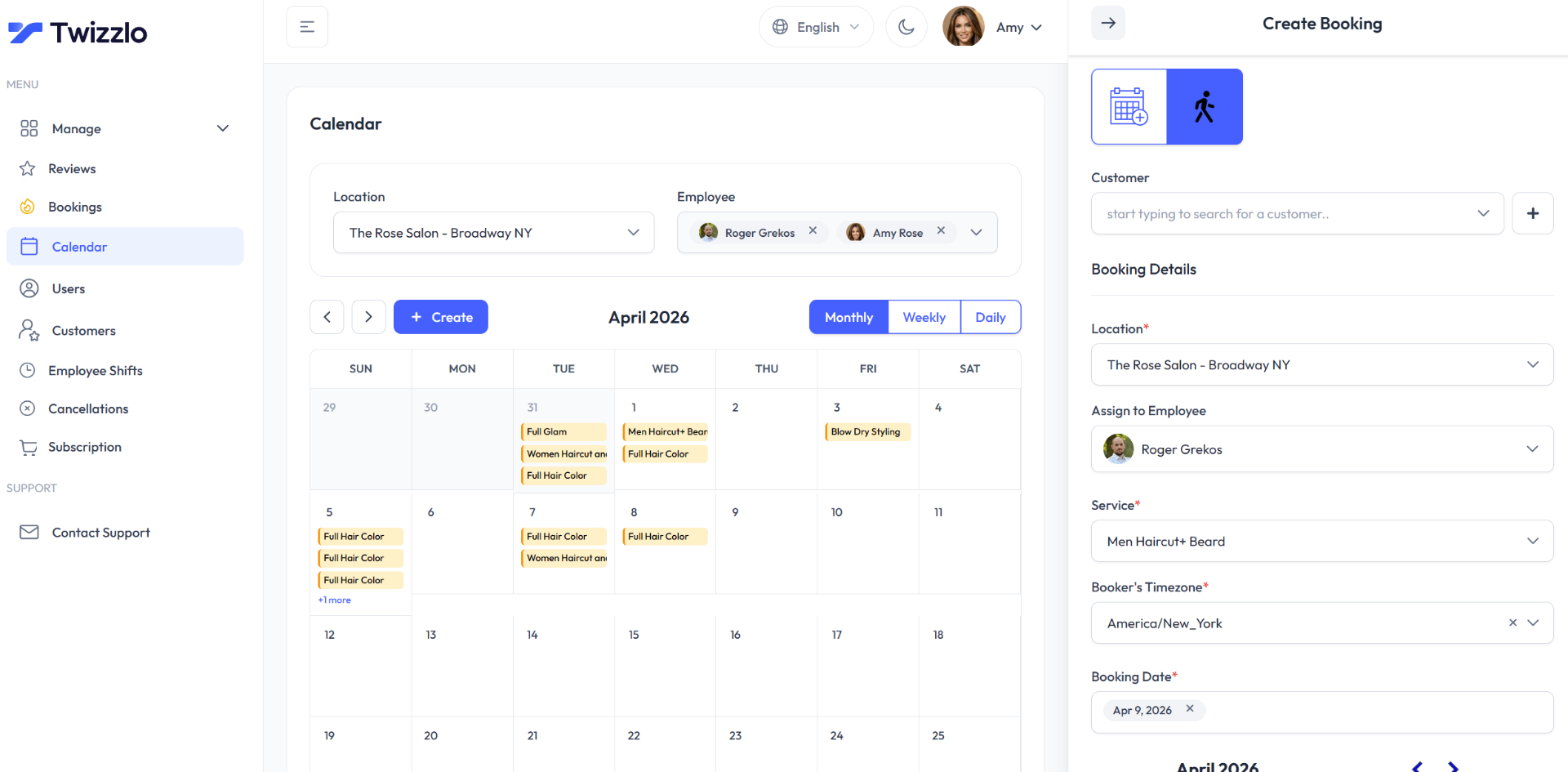
If you want your booking link, reminders and cancellation window to follow the agreement you just wrote, start on Twizzlo’s free plan, or compare both plans on the pricing page.
Frequently Asked Questions About Coaching Contracts
Do I need a lawyer to create a coaching contract
Not always. Many coaches start with a professional template and tailor it carefully. Before you use it, have the final version reviewed locally, especially if your offer is unusual, high-risk or tied to regulated advice.
Is a coaching agreement different from a contract
In practice, coaches often use the terms interchangeably. What matters is that the document clearly states the parties, terms, responsibilities, and signatures.
Should I coach a client before they sign
No. Keep discovery separate from delivery. If the agreement isn’t signed, the paid coaching relationship hasn’t been properly set.
What if a client asks to change the terms
Review the request calmly. Some edits are reasonable. If the change weakens your boundaries, payment protection, or scheduling process, decline it.
How should I store signed coaching contracts
File each signed agreement where you can find it in seconds: one secure folder or document system, with the client’s name and start date in the file name. Put renewal and expiry dates on your own calendar, and never leave the only signed copy in an email thread.
Can I use one coaching contract template for every client
You can use one base template, but you should customize sections that depend on the offer. Group programs, retainers, and corporate work usually need different wording.
What belongs in the contract besides price
The essentials are scope, responsibilities, scheduling, cancellations, confidentiality, disclaimers, payment terms, termination, and signatures. If it’s likely to cause confusion later, write it now.
What is a coaching contract
A coaching contract is a written agreement between coach and client that defines what is being purchased: the scope of coaching, session format and cadence, payment terms, cancellation rules, confidentiality, and how either side can end the engagement. It works as the operating system for the relationship, setting expectations before delivery starts.
Does the ICF require a coaching agreement
Yes, for its members and credential holders. The ICF Code of Ethics, in effect since April 1, 2025, and read September 28, 2026, asks them to co-create a coaching agreement before coaching begins. If you hold no ICF credential, a written agreement that sets the process, plans and goals first is still sound practice.
Where can I find a sample coaching contract
Copy the 20-clause sample coaching contract on this page, replace the bracketed fields with your own terms and use the fill-in guide after it for example values. Coaching associations and e-signature tools also publish sample agreements. Whichever you start from, have the final version reviewed by a local lawyer.
What should a group coaching contract include
Everything in a one-to-one agreement, plus rules for the group: members agree to keep what others share confidential, the contract says what happens when someone misses a live session, whether sessions are recorded and who can watch them, how members join or leave mid-program, and what is refunded if the program is canceled or rescheduled.
What should a business coaching contract include
Start by naming who the client is. When a company pays, a business or executive coaching contract should say who signs and who pays, which business goals are in scope, what the sponsor receives, such as attendance or progress summaries, what stays confidential between coach and participant, and who can end the engagement and on what notice.
Sources and methodology
- International Coaching Federation: ICF Code of Ethics (opens in a new tab)Read . Supports: Standards 1.1 and 2.3 (agreeing roles, responsibilities, confidentiality and financial arrangements before coaching begins; disclosure exceptions), in effect since April 1, 2025
- International Coaching Federation: ICF Core Competencies (2025 edition) (opens in a new tab)Read . Supports: Competency 3, Establishes and Maintains Agreements, item 3.03 (fees, scheduling, duration, termination and confidentiality); text from the 2025 PDF linked on this page
- Twizzlo pricing page (opens in a new tab)Read . Supports: Twizzlo plans, booking cap, SMS allowance, money-back guarantee, support and the online payment fee
- Twizzlo features page (opens in a new tab)Read . Supports: Twizzlo booking-side features and the calendar screenshot (same image)
From our editorial policy
- Our templates, such as consent forms, contracts and confirmation messages, are text to copy and adapt to your business. They are not legal advice. Have a qualified local professional review anything you rely on.
- To report an error, email support@twizzlo.com with the subject line "Correction: [page URL]". Tell us what is wrong and, if you can, link a source.
Update history
- : Added the full 20-clause coaching agreement with a fill-in guide, clause changes by coaching offer and a clause-to-booking-rule table; cited the ICF standards; removed an unsupported template price; corrected the Twizzlo plans section.
Start free, upgrade when you grow
Flat-rate booking software. No per-seat, per-chair or per-location fees.
- Free plan up to 150 bookings a month, not a trial
- Business Pro is $29.99 a month per business for unlimited bookings, with a 30-day money-back guarantee
- 24/7 support by email