
Massage therapy scheduling software for solo therapists and studios
Protect every 60- and 90-minute session: clients book and prepay online, reschedule themselves from your link and get reminders. Massage therapy software for solo therapists and small studios.
Plans
- FreeUp to 150 bookings a month, not a trial
- $0/mo
- Business ProPer business: unlimited bookings, 50 SMS a month
- $29.99/mo
- Unlimited staff and locations on both plans
- 30-day money-back guarantee on Business Pro
- 24/7 support
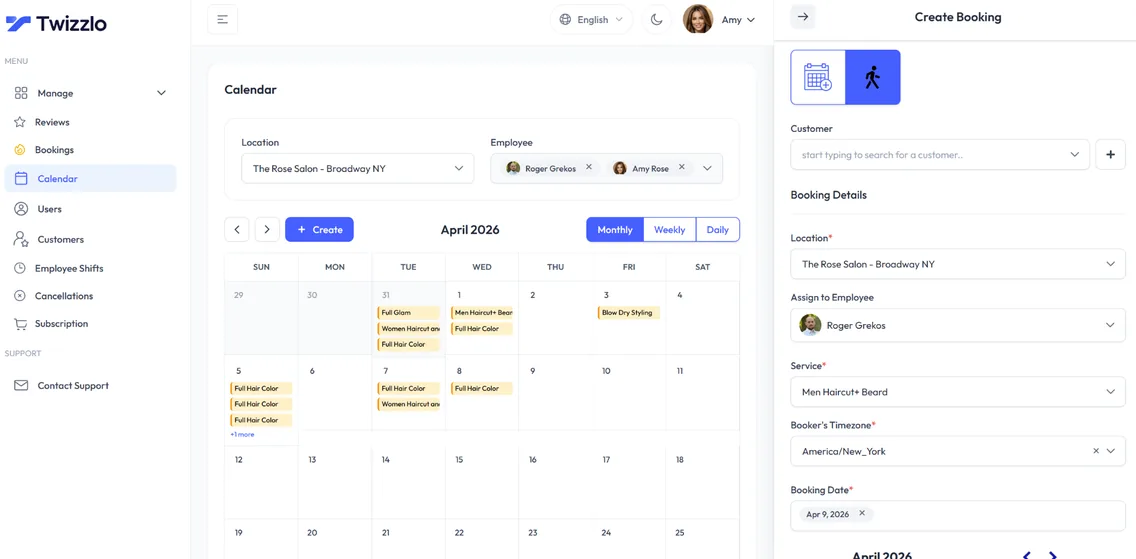
Twizzlo is massage therapy scheduling software built for solo LMTs and small studios. New clients book online and receive email confirmations and reminders (SMS too on Business Pro). You start every session already knowing the pressure preference and past-visit notes, because they sit on the client's profile. As massage therapy software goes, Twizzlo covers the booking, reminder and client-history side at one flat price.
As a massage booking app that runs in any browser, Twizzlo also supports prepaid bookings through Stripe and a clear cancellation policy. Solo therapists comparing massage scheduling software tend to need three things: online booking, client notes and reminders that reduce no-shows. Notes stay searchable on the client profile, and role-based access controls which staff can see them. No per-therapist pricing.
Sound familiar?
Running a massage practice shouldn't feel like a full-time admin job.
Reschedules over a dozen messages
No-shows on long sessions
Repeat clients without any history
On this page9 sections
Massage therapy software for solo therapists and small studios
Most massage therapists do not need a large practice suite. They need massage therapy software that fills the calendar, reminds clients, takes payment and remembers each client's preferences. Twizzlo covers those jobs for a solo therapist working from one room and for a studio with several therapists.
Each session length is its own service with a price and duration, each therapist has an individual schedule, and buffer times leave room to change linens and reset between clients. Real-time availability means the booking page only shows times that are actually open.
If you are searching for massage therapy computer software, note that Twizzlo is web-based: there is nothing to install, and the same account opens in any phone, tablet or computer browser. That makes it software for massage therapists who check their day between sessions, not only at a desk.
Online booking for massage therapists
Many clients think about booking a massage after work, on their phone. Twizzlo's 24/7 booking page lets them choose a session and a therapist, see open times and book without calling, and it runs in the browser with nothing to download.
Confirmations and reminders go out by email, and by SMS on Business Pro. Clients can reschedule themselves from the booking link, so you are not answering messages between sessions.
That is the core of any massage therapy booking software, and the first thing to test in scheduling software for massage therapists: book a test session from your own phone and count the taps.
What massage therapy software costs, solo and studio
The table prices two common setups, a solo therapist with one calendar and a studio with three therapists at one location, using the plan prices each vendor publishes on its own pricing page, read on the date shown. For the monthly cost once card fees on prepaid sessions are added, at 40 and 80 sessions, see our guide to the best online booking system for massage therapists.
Monthly subscription for a solo therapist and a three-therapist studio, US prices before tax
Twizzlo Free
- Solo therapist, 1 calendar
- $0, up to 150 bookings a month, no SMS
- Studio, 3 therapists
- $0, same limits, staff unlimited
- Online or card payment charges
- Stripe processing plus a 1.5% Twizzlo platform fee
Twizzlo Business Pro
- Solo therapist, 1 calendar
- $29.99, unlimited bookings, 50 SMS a month then $0.03 each
- Studio, 3 therapists
- $29.99, staff unlimited
- Online or card payment charges
- Stripe processing plus a 1.5% Twizzlo platform fee
Acuity Scheduling (Sep 16, 2026)
- Solo therapist, 1 calendar
- Starter $20/mo (1 calendar, email reminders). SMS reminders start on Standard at $34/mo
- Studio, 3 therapists
- Standard $34/mo (up to 6 calendars)
- Online or card payment charges
- Payment provider charges are separate from the subscription
Square Appointments (Sep 17, 2026)
- Solo therapist, 1 calendar
- $0 on Free; $49 on Plus, which adds cancellation policy and no-show fees
- Studio, 3 therapists
- Same prices, per location; staff calendars unlimited
- Online or card payment charges
- Online: 3.3% + 30¢ on Free, 2.9% + 30¢ on Plus
Vagaro (Sep 8, 2026)
- Solo therapist, 1 calendar
- $23.99 (marked limited time)
- Studio, 3 therapists
- $43.99
- Online or card payment charges
- Under $4,000 a month processed: 2.6% + $0.10 swipe or dip, 3.5% + $0.19 keyed in
Setmore (Sep 8, 2026)
- Solo therapist, 1 calendar
- $0 on Free; SMS reminders and deposits need Pro at $12/mo
- Studio, 3 therapists
- $0 on Free; Pro $36 monthly or $15 billed annually
- Online or card payment charges
- Stripe at 2.9% + 30¢ in the US, per Setmore
Fresha (Jul 13, 2026)
- Solo therapist, 1 calendar
- Independent: $19.95/mo, single calendar
- Studio, 3 therapists
- Team: $44.85 ($14.95 per team member)
- Online or card payment charges
- Processing varies by region. 20% (minimum $6) on new clients from the Fresha marketplace
Booksy (Sep 17, 2026)
- Solo therapist, 1 calendar
- $29.99 + tax
- Studio, 3 therapists
- $69.99 + tax
- Online or card payment charges
- 2.69% + $0.30 for mobile payments or keyed entry
GlossGenius (Sep 8, 2026)
- Solo therapist, 1 calendar
- Standard: $24 billed annually, $28 monthly
- Studio, 3 therapists
- Gold: $48 billed annually, $56 monthly (Standard has no multiple provider booking)
- Online or card payment charges
- Flat 2.6% on every plan
Prices are from each vendor's own pricing page on the date shown and can change, so check before you buy. Twizzlo's 1.5% platform fee applies to online payments, on top of your Stripe rate. Full breakdowns: Twizzlo vs Acuity Scheduling, Twizzlo vs Square Appointments, Twizzlo vs Setmore and every comparison.
Massage appointment software that protects 60- and 90-minute sessions
Massage appointment software earns its place on long sessions, because a late cancellation on a 90-minute session is hard to refill at short notice. Turn on prepaid bookings for longer sessions: the client pays the full session price through Stripe when they book, so the time is only held once it is paid. Cancellation handling, custom booking rules and no-show fees support the cancellation window you set, and if a client does not show, you decide whether to keep or refund the payment.
Good massage therapy appointment scheduling software also protects the time around each session: buffer times keep the next client from being booked into the minutes you need to reset the room.
For policy wording, see how to set a no-show charge, and for how online booking fills a massage schedule, read our guide to massage booking software.
Massage therapy client software: notes and preferences on every profile
As massage therapy client software, Twizzlo keeps the booking and service side of each client on one profile, and any therapist with access sees it before the session starts. Role-based access controls who can see client details. It is not a clinical records tool, so keep intake and treatment notes where you keep them now.
Repeat client tracking and new customer tracking show whether first-time clients come back for a second session.
Each client profile holds the details that make the next session feel personal:
- Notes and preferences, such as pressure, focus areas, music or room temperature
- Allergies, for example to an oil or a lotion
- Visit history, with every past session
- Total spend, appointments and tips together
Massage scheduling software for studios with several therapists
As a studio grows, the calendar becomes a staffing job, so massage studio software has to schedule therapists as well as sessions. Each therapist has a calendar of their own, Employee Shifts show who is working when, and sessions are assigned only to the therapists who offer them.
Role-based access decides what each therapist can see and change, and staff availability and utilization in the insights show who is busy and who has room. That is the massage management software side of Twizzlo, in the same account as your bookings.
Adding a therapist or a second location does not change the price on either plan, because staff and locations are unlimited on Free and Business Pro. Start free, or see plans and payment charges.
Massage business software: payments, tips and insights
Massage software should help you run the business, not only fill the book. Clients pay online through Stripe when they book and can add a tip, and you can record manual payments for anything paid another way, so each client's total spend stays complete.
As massage business software, Twizzlo turns bookings and payments into insights: revenue, booking volume, repeat client tracking and new customers, in daily, weekly and monthly views. When you compare massage business management software, check which of these sit behind a higher tier. On Twizzlo, Business Pro includes every feature with no paid add-ons, and Free includes the core booking, client, staff, insights and payment features up to 150 bookings a month, without SMS.
Online payments carry Stripe processing plus a 1.5% Twizzlo platform fee. Still comparing tools? Our guide to the best massage software compares the plan a full-time therapist can use and the cost for one to eight therapists, from each vendor's own pricing page.
Set up massage booking in six steps
- 1
List your sessions
Add each session length and any extra services, each with a price, a duration and buffer time to reset the room.
- 2
Set your availability
Enter your working hours, time off and blackout dates. Studios add each therapist's schedule and shifts.
- 3
Add therapists
In a studio, create a profile for each therapist, give them Twizzlo access and assign the sessions they offer.
- 4
Protect long sessions
Turn on prepaid bookings for longer sessions and write down your cancellation window.
- 5
Connect Stripe
Connect Stripe to take online payments and tips at booking. Online payments carry Stripe processing plus a 1.5% Twizzlo platform fee.
- 6
Share your booking link
Make a test booking, then add the link to your website, Google Business Profile and social profiles.
Built for massage therapists
24/7 online booking
Clients book appointments any time from your booking link, with real-time availability on any device.
Per-staff calendars
A calendar per staff member with real-time availability, buffer times, time off and blackout dates. Drag an appointment to reschedule it.
SMS & email reminders
Automated confirmations and reminders by email, plus SMS on Business Pro.
Client CRM
Every visit, note, preference, allergy and total spend saved to a searchable profile.
Prepaid bookings & tips
Collect online payments and tips at the time of booking through Stripe. Protect long slots with prepaid bookings: the client pays the full service price when they book.
Staff & shift management
Bookable and non-bookable staff, per-staff schedules, multi-location shifts, role-based access and assigned services, with unlimited staff.
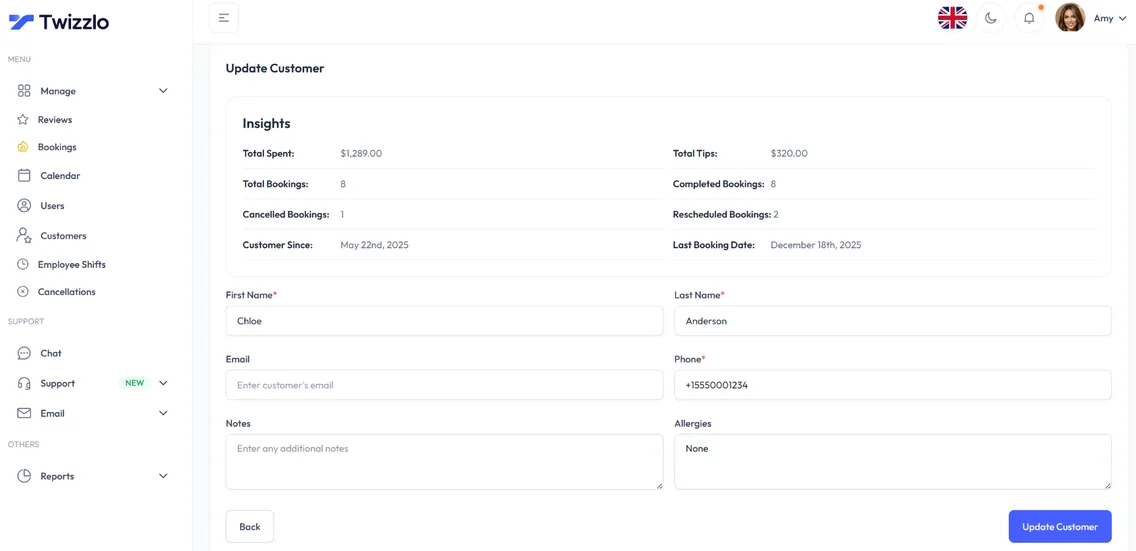
Know every client before they walk in
Total spend, bookings, last visit, notes and preferences sit on one client profile, so you know a client's usual pressure before the session starts.
- Visit and spend history
- Notes, allergies and preferences
- Contact details on file
- Client search and filtering
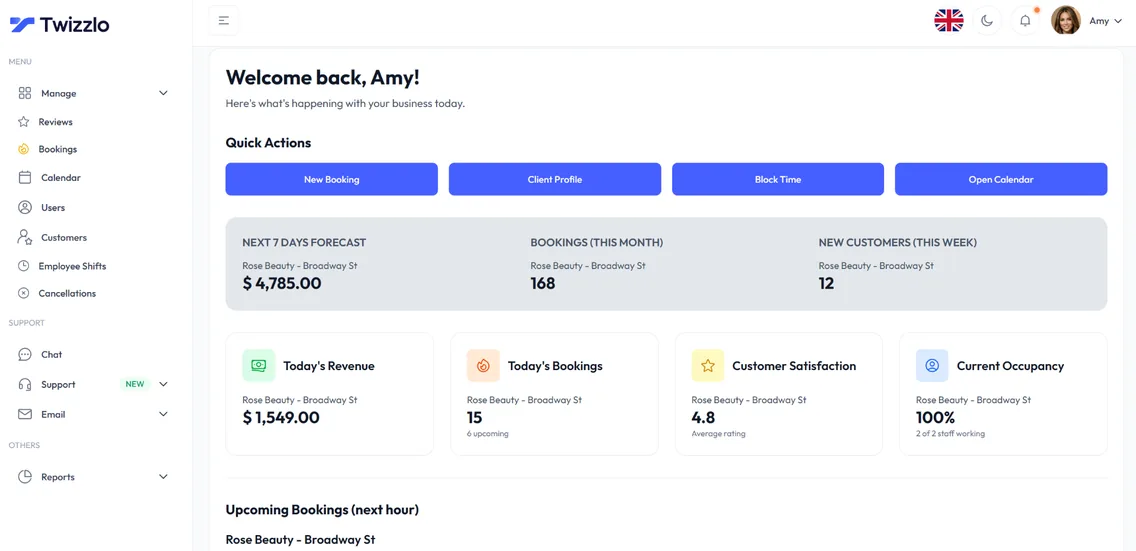
See what's working before the day starts
Bookings, revenue, next-hour insights and staff utilization are on the dashboard the moment you log in.
“Notes searchable, no-shows gone, reschedules handled by clients themselves. My days actually flow.”
Compare Twizzlo with other massage scheduling tools
Side-by-side comparisons of pricing, fees and features.
Massage therapy scheduling software FAQ
What is the best scheduling software for massage therapists?
The best fit lets clients book online 24/7, sends reminders by email (and by SMS on Business Pro), supports prepaid bookings, cancellation handling and no-show fees, and doesn't cost a full session's revenue per month. Twizzlo covers all of the above, starting free for up to 150 bookings a month.
How do massage therapists manage cancellations?
Decide your cancellation window (for example, 24 hours) and put it in writing. Twizzlo's cancellation handling, custom booking rules and prepaid bookings let you hold to that policy, and clients can reschedule themselves from the booking link instead of messaging you.
Are client notes kept private?
Notes live on the client profile inside your Twizzlo account, not on the public booking page. Role-based access lets you decide which staff can see client details.
Is Twizzlo really free?
Yes. Free is $0 a month, free forever and not a trial. It covers up to 150 bookings a month with unlimited staff, locations and client records, real-time insights, email confirmations and reminders, and online payments and tips through Stripe. It does not include SMS reminders, which require Business Pro. There is no plan fee; online payments you take carry your Stripe processing rate plus a 1.5% Twizzlo platform fee.
How long does setup take?
There is nothing to install, and how long setup takes depends on how many services and staff you add. It is one short checklist: add your services with prices and durations, set your hours, add staff if you have a team, connect Stripe if you want online payments, then share your booking link.
Is Twizzlo good massage therapy software for a solo therapist?
Yes, if what you need is online booking, reminders, prepaid bookings and client notes. Free covers up to 150 bookings a month with email reminders. Business Pro adds unlimited bookings and 50 SMS a month for $29.99.
Can clients book a massage online without an app?
Yes. The booking page runs in any phone or computer browser, 24/7, with nothing to download.
Can I take a deposit before a massage?
You can take payment before the session with prepaid bookings. They work on any service: the client pays the full price of the massage through Stripe when they book, so the session is only held once that payment goes through. If a client does not show, you decide whether to keep or refund it. Online payments carry Stripe processing plus a 1.5% Twizzlo platform fee.
What does massage scheduling software cost for a three-therapist studio?
$0 on Twizzlo Free for up to 150 bookings a month without SMS, or $29.99 a month on Business Pro for unlimited bookings and 50 SMS a month. Either way it is the same price as for a solo therapist, because staff are unlimited on both plans. The cost table on this page shows what other vendors publish for the same studio.
Can clients book and reschedule a massage online after hours?
Yes. The booking page takes bookings 24/7, so a client can book a session late in the evening and only sees times that are still open. Clients reschedule from the same link, and reminders go out by email, and by SMS on Business Pro. That is the job of online massage scheduling software: clients book and change sessions while you work, and you answer fewer messages between sessions.
Does each therapist get their own massage schedule?
Yes. Every therapist has their own calendar, working hours and time off, and sees their own schedule when they sign in to Twizzlo. Sessions are assigned only to the therapists who offer them, and Employee Shifts show who is working when. That is what massage scheduling software should do for a studio with several therapists.
Is Twizzlo massage business software or only a calendar?
Both: booking plus the business side. Besides online booking and reminders, Twizzlo takes online payments and tips through Stripe, lets you record manual payments, keeps client profiles with notes, visit history and total spend, and shows revenue, booking volume, repeat client and new customer insights. Online payments carry Stripe processing plus a 1.5% Twizzlo platform fee.
Guides for massage therapists
Best Massage Software in 2026: What Each Plan Really Costs
Best massage software compared on each vendor's own pricing page: the plan a full-time therapist can use and the cost for one to eight therapists.
GuideMassage Booking Software That Fills Your Schedule and Cuts No-Shows
Massage booking software for therapists and studios: what to look for, how many sessions fit a day at each buffer, how pricing grows, and which tools fit.
TemplateMassage Therapy Consent Form Template 2026
Copy-ready massage therapy consent form template with the seven sections every form should include and the three consent layers you should not separate.
Start taking massage bookings online
Start with the Free plan, then choose Business Pro if you need unlimited bookings and SMS. Review the current plan limits and payment charges before choosing.
- Free plan, not a trial
- 30-day money-back guarantee on Business Pro
- 24/7 support